Changing for climate change: Why policymakers need to embrace behavioural insights
Published: 24 April 2026
Data: one figure
Europe experienced its hottest year to date in 2024 and it is the fastest-warming continent, at around twice the global average (ECMWF, 2026). As a result, flash floods and extreme heatwaves are only some of the effects that many Europeans have endured in recent years (European Environment Agency and Eurofound, 2026). Thus, the European Union has committed to mitigating these effects, moving beyond the reduction of greenhouse gas emissions towards adaptation by the entire economy. Achieving climate neutrality in Europe requires transformations in industries, production processes and consumption patterns. These system-wide changes cannot happen without public support and acceptance, which will then translate into collective and individual behaviour changes.
Understanding how people make decisions and respond to policies is therefore essential. Insights from behavioural science – the multidisciplinary study of human action that combines psychology, behavioural economics, sociology and anthropology – provide valuable tools for understanding and influencing human decision-making. However, its translation into policy across the EU is still lagging (Eurofound, forthcoming). This article explores why behavioural insights should be integrated into policymaking and how they can contribute to more effective and socially inclusive strategies.
Policies often assume that individuals’ decision-making is based on rational evaluations, such as weighing costs and benefits, processing available information, and acting in their own best interest. However, decades of research in behavioural science have demonstrated that human decision-making is shaped by many psychological, social and contextual factors. Rather than rationality, individuals often act based on habits, social norms and heuristics. Heuristics are intuitive rules of judgement and decision-making that rely on minimum information and cognitive resources (Gigerenzer and Todd, 1999; Kahneman, 2011). Factors such as how choices are framed, the default options available, the salience of particular information, and the influence of social context all shape behaviour in ways that standard policy models frequently overlook (Thaler and Sunstein, 2008; Dolan et al., 2012).
As a result, policies designed without consideration for the behavioural element may fail to achieve intended outcomes. An example from across the Atlantic illustrates the issue well: the US State Energy Efficient Appliance Rebate Program was designed on the assumption that financial incentives would shift consumers towards more efficient appliance models. Yet an evaluation by Houde and Aldy (2017) found that around 70% of rebate claimants would have made the same purchase regardless; an additional 15 to 20% simply changed their timing of purchase; and many used the subsidy to upgrade to larger, higher-quality but less energy-efficient appliances, the opposite of the programme’s intent.
Climate policy requires reflection and consideration on how people go about their daily lives: how they decide to heat their homes, commute to work, travel to their holiday destinations, and structure their diets. These everyday decisions don’t rely merely on rational decision-making, but incorporate behavioural aspects such as habits, salience, social norms and biases.
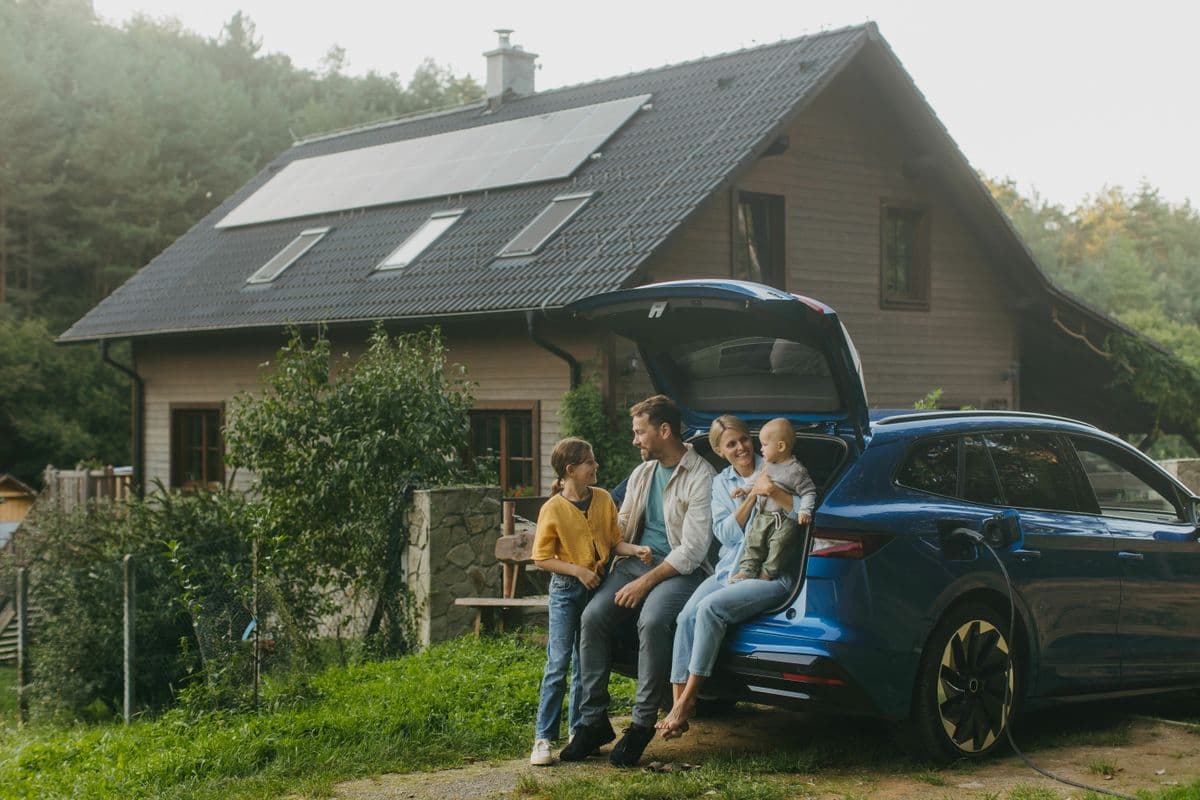
For example, present bias – the tendency to disproportionately favour immediate rewards over future benefits – can make the upfront costs of energy-efficient retrofitting or electric vehicle adoption feel disproportionately large relative to long-term savings. Status quo bias – the tendency to prefer things not to change – may help explain why adoption rates differ across green technologies: installing solar panels requires no change in daily routines, whereas switching to an electric vehicle entails changes in driving and fuelling behaviour.
Additionally, the impacts of individual climate actions are often separated from the actions themselves by significant temporal and spatial distance, reducing the perceived urgency of pro-environmental behaviour. Moreover, people can systematically underestimate how willing others are to act – a phenomenon known as ‘pluralistic ignorance’ – which discourages individual effort by fostering the false belief that ‘nobody else is doing anything’, often followed by ‘why should I?’.
The challenge is compounded by economic realities. The evidence consistently shows that people are more likely to engage in low-cost behaviours with correspondingly low environmental impact than in high-cost actions (such as home retrofitting or dietary change) that would deliver the greatest reductions in emissions. Costs are in fact a primary consideration for most households, a trend exacerbated by a succession of recent shocks, including the COVID-19 pandemic, Russia’s invasion of Ukraine and the ensuing energy crisis, and, most recently, the US-Israeli military operation against Iran, which has sent oil prices surging. Financial stress can also impose a ‘bandwidth tax’, consuming mental resources and leaving individuals with no cognitive capacity for long-term planning around energy efficiency or sustainability.
Taking all of this into consideration, it is clear how understanding these facets of human behaviour and the related psychological mechanisms helps governments better address the complexity and multidimensionality of climate change policy. Additionally, behavioural insights provide a range of additional policy instruments that complement regulatory and economic tools.
Behavioural insights in public policy are frequently misunderstood as consisting solely of nudges. Nudges in turn can be defined as subtle adjustments to choice architecture (the way in which choices are presented to people) that steer people towards better decisions without restricting options. Nudges are indeed part of the toolkit, and they can be effective. In Finland, nudges targeting older people addressed specific mobility barriers such as seasonal safety concerns, route planning difficulties, and lack of confidence with digital services; these nudges were designed in cooperation with older people. The barriers that were addressed would have been missed entirely by universal public transport campaigns if it were not for the work done to understand them from a behavioural standpoint. In Luxembourg, correcting citizens’ misperceptions about how sustainably their neighbours actually behaved led to measurable reductions in meat consumption and increased support for green regulations.
However, the true potential of behavioural insights extends far beyond individual-level interventions. A framework developed by the European Commission’s Joint Research Centre identifies five levels at which behavioural science can inform policy (Dupoux et al., 2025): from creating targeted behavioural interventions designed to influence individual choices, through designing single policies and coordinating complementary policy mixes, to enhancing coherence across different policy areas and, at its most ambitious, contributing to systemic change by redesigning the social, physical and institutional environment within which choices are made. The examples in Figure 1 respond to the framework’s central premise: that the full potential of behavioural insights for policy remains largely untapped, and that this is particularly relevant for policies supporting the green and just transition (Eurofound, forthcoming).
Five-level framework for application of behavioural insights and corresponding policy examples
|
Behavioural
intervention |
Single policy
|
Policy mix
|
Policy
interconnection |
System
|
|
Influence individual behaviours and improve the communication of existing policies |
Ground policy choice and guide policy design |
Complement traditional policies and leverage synergies across policy tools in a specific area |
Enhance policy coherence across different policy areas |
Achieve a better-functioning, more cohesive system |
| Examples | ||||
|
|
|
|
|
Source: Authors
The Dutch Climate Plan 2025–2035 illustrates what the application of behavioural insights would look like at its most effective. The plan explicitly diagnoses the intention–action gap, recognising that while 80% of the Dutch population believes that climate action is necessary, only 55% are currently adapting their daily lives. Rather than treating this as a communication problem, the plan embeds justice as a design principle, integrates the concept of mental bandwidth into subsidy design, uses procedural justice through a Citizens’ Assembly, and mandates that government leads by example to validate emerging social norms. It represents a fundamentally different approach: not persuading individuals to make better choices within existing systems but reshaping those systems so that sustainable choices become the easy, logical and fair default action.
The other examples listed in Figure 1 are drawn from a forthcoming Eurofound research paper that examines how behavioural insights are being applied to green policy across the EU. This paper takes a deep dive into the current landscape of green behavioural public policy across the EU, assessing where capacity exists, where it is emerging and where it remains absent (Eurofound, forthcoming).
The evidence reviewed by Eurofound points to three interconnected priorities for policymakers seeking to design effective green behavioural public policy.
1. Ensure that climate policies reflect the multidisciplinary nature of the issue
The behavioural dimensions of climate change are diverse. Values, social identity, political ideology, risk perception, emotional responses, economic concerns, trust in institutions and community-level dynamics all interact to shape how individuals respond to climate policies. No single disciplinary lens can capture this complexity. Effective green behavioural public policy demands input from psychology, sociology and anthropology alongside economics, combining a rigorous review of evidence with methods that reveal the real barriers citizens face, rather than the assumed ones.
2. Integrate behavioural insights early in policy development
Behavioural insights are too often treated as a communication tool, applied after a policy has been designed to encourage uptake or explain a regulation. This underestimates what behavioural science can offer. When integrated from the outset, behavioural insights can shape not only how a policy is communicated but what it contains, who it reaches, and how its instruments interact. Policies built on the assumption of fully rational, fully informed citizens will systematically misjudge how people respond, producing interventions that look sound on paper but underperform in practice.
3. Focus on inclusion and fairness
Perceptions of fairness consistently emerge as one of the strongest predictors of public support for climate policies (Bergquist et al., 2022; Dechezleprêtre et al., 2025). Support erodes when policies are perceived as disproportionately benefiting the wealthy or imposing costs on those least able to bear them. Behavioural insights are essential here, because poorly designed interventions can themselves become sources of inequity. Interventions built around a narrow understanding of the informed, digitally literate, cognitively resourced citizen risk systematically disadvantaging older adults, lower-income households, and communities in rural or peripheral areas. The evidence also shows that citizens facing immediate financial stress cannot readily devote cognitive bandwidth to long-term behavioural change.
In a nutshell, behaviourally informed policy helps ensure that climate policies do not disproportionately burden vulnerable groups. When integrated early in the design process, behavioural insights can identify the hidden barriers (cognitive overload, administrative complexity, misperceived social norms) that cause well-intentioned policies to fail those they are designed to support.
Image © Halfpoint/Adobe Stock
This section provides information on the data contained in this publication.
The figure related to this publication is available for preview.
Eurofound recommends citing this publication in the following way.
Eurofound (2026), Changing for climate change: Why policymakers need to embrace behavioural insights, article.
Reference no.
EF26010