IREC 2017 - Industrial relations in Europe: between core and peripheries
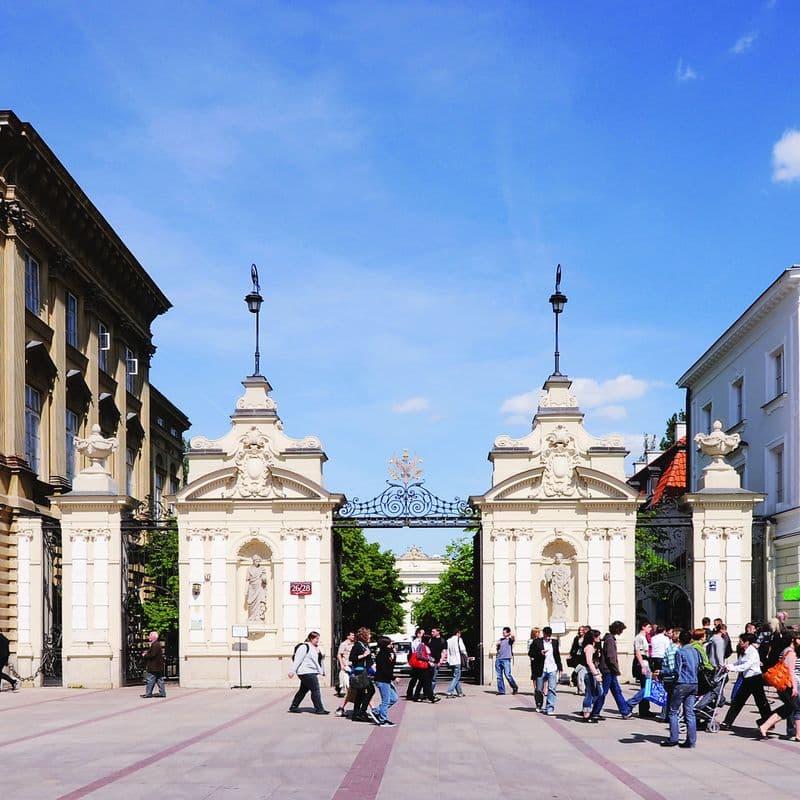
7 September 2017 - 8 September 2017
Event background
The Industrial Relations in Europe Conference (IREC) 2017 will take place in Warsaw on 7-8 September 2017. It is co-organised by the Polish Sociological Association, the University of Warsaw, and the Warsaw School of Economics. The theme of this year's conference is Industrial relations in Europe: between core and peripheries.
Background
Industrial relations in European countries are currently in the process of profound transformation that will have both long-term and short-term effects. The long-term trends, such as decentralisation of collective bargaining, decreasing union density and erosion of corporatist institutions of social dialogue, have been further exacerbated by the impact of the global financial crisis, the resulting austerity measures and the emergence of new systems of European governance. In the face of multiple challenges, such as the expansion of precarious employment, increasing mobility of labour and capital, the weakening of welfare states and systems of social protection and the rise of digital economy, industrial relations actors’ capacities to represent their actual and potential members and to regulate employment relations have become increasingly limited.
In the context of the current economic and political crises of the European Union, it becomes necessary for our discipline to ask questions about the future of the European industrial relations. Are we now witnessing the expansion of illusory corporatism (which was previously said to be characteristic of Eastern European countries) also to the Western 'core' countries? Alternatively, is the path-dependent development model of variegated industrial relations still valid, and therefore, do the current challenges simply reinforce the existant country versus country, East versus West, or core versus periphery differences? Crucially, under which conditions can the current crisis be used as an opportunity to rethink and implement the high-road European model of industrial relations across the European Union countries? Can the crisis be used as a springboard for creating new solidarities and institutional coordination in Europe?
The Industrial Relation in Europe Conference in Warsaw in 2017 will aim to develop a critical understanding of the above-mentioned problems and challenges.
Eurofound contributions
Eurofound researchers will submit abstracts, present papers and participate in the conference.
Further information on the streams and updates will be published on the conference website: irec2017.uw.edu.pl
Agenda
Other events
Explore other Eurofound events.


