Zum Hauptinhalt springen
Diese Seite ist derzeit nicht vollständig in der ausgewählten Sprache verfügbar. Bitte wechseln Sie zur englischen Version oder lesen Sie die Sprachenpolitik von Eurofound.
Thema
Zuletzt aktualisiert: 27 August 2026

Teleworking

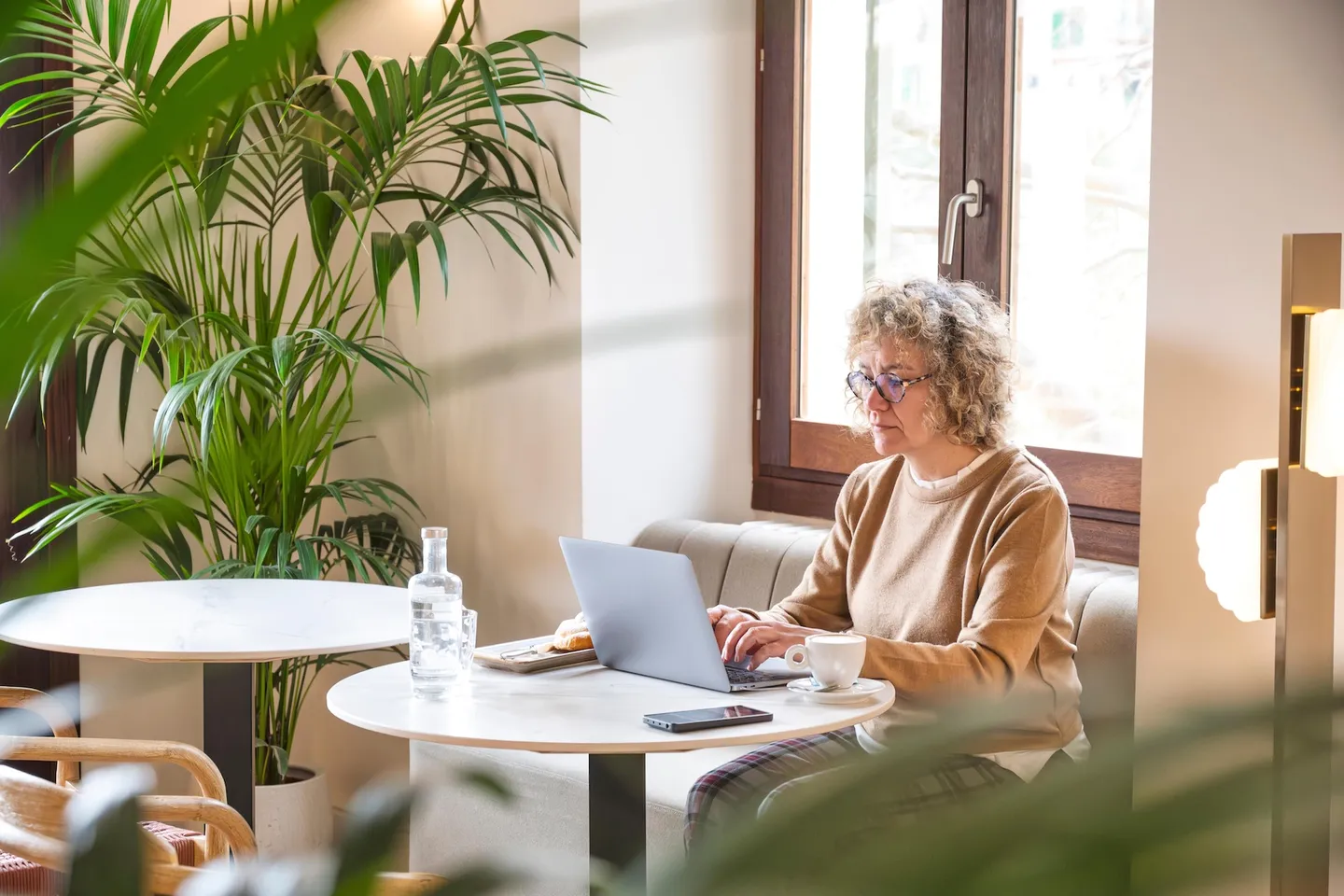
Telework is a work arrangement in which work is performed outside a default place of work, normally the employer’s premises, by means of information and communication technologies (ICT). The main features of telework are the use of computers and telecommunications to change the usual location of work, the frequency with which the worker is working outside the employer’s premises and the number of places where workers work remotely (mobility).

Considering mobility, ICT-based mobile work can be defined as the use of information and communications technologies, such as smartphones, tablets, laptops and/or desktop computers, for work that is performed outside the employer’s premises and largely ‘location independent’. Mobile work could be considered a variation of telework. When using the term ICT-based mobile work, the emphasis is on the fact that workers work in a range of locations and use ICT to connect to shared company computer systems.

Nachfolgend finden Sie die neuesten Inhalte zu diesem Thema.

27 August 2026
Der Wechsel zum hybriden Arbeiten: Management-Herausforderungen – Digitale Geschichte
Diese digitale Geschichte präsentiert die wichtigsten Erkenntnisse darüber, wie hybride Arbeit Managementpraktiken auf Linienmanagerebene verändert: Warum hybride Arbeit neue Formen der Koordination erfordert; Wie Manager Sichtbarkeit und Leistungsüberwachung ohne physische Mitanwesenheit aufrechterhalten; Was den Teamzusammenhalt und das Wohlbefinden über verteilte Teams hinweg aufrechterhält; Wie ein gerechter Zugang zu Informationen und Chancen gewährleistet werden kann; Wo politische Leitlinien oder Unterstützung am dringendsten benötigt werden.
Sara Riso+1
Digitale Geschichte
27 August 2026
Der Wechsel zum hybriden Arbeiten: Managementherausforderungen
Die COVID-19-Pandemie beschleunigte den Übergang zum hybriden Arbeiten, bei dem die Mitarbeitenden ihre Zeit zwischen Homeoffice und vor Ort aufteilen. Obwohl dieses Modell mehr Flexibilität bietet, bringt es auch neue Herausforderungen für Linienmanager und andere Vorgesetzte mit sich. Dieser Bericht untersucht, wie hybride Arbeit die Arbeitsorganisation neu gestaltet und die täglichen Managementpraktiken auf Führungsebene beeinflusst, wobei der Schwerpunkt auf Veränderungen in Koordination, Kommunikation, Leistungsmanagement und Mitarbeiterwohlbefinden liegt.
Sara Riso+1
Forschungsbericht
21 July 2026
Jederzeit und überall arbeiten: Die Qualität der Arbeitszeit in der EU
Dieser Forschungsbericht untersucht, wie flexible Arbeitsbedingungen in der EU die Qualität der Arbeitszeit, Autonomie und das Wohlbefinden der Mitarbeiter beeinflussen, und vergleicht die jüngsten Entwicklungen mit vor einem Jahrzehnt. Es analysiert Unterschiede zwischen Qualifikationsniveaus, Sektoren und Mitgliedstaaten und bewertet die Rolle von Vorschriften und politischen Maßnahmen wie dem Recht auf Abschaltung.
Carla Blanco Ameneiros+11
Forschungsbericht

Teleworking took off in all EU countries with over a third of those in employment starting to work remotely at the outset of the COVID-19 pandemic, many with limited or no previous experience of working in this way. 

The European Union Labour Force Survey (EU-LFS) distinguishes between workers who work ‘usually’ from home and those who do so ‘sometimes’. The surge in telework in 2020 was driven by an increase of people working usually from home. Prior to the pandemic, working sometimes from home was more common in most countries and in 2020 remained at similar levels as in 2019. In 2020, working usually from home became the more typical arrangement.

Most EU workers expressed a preference to work from home several times per week in the long term.  

Home-based teleworkers are twice as likely to exceed the 48-hour working time limit as workers onsite and are significantly more likely to work in their free time. 

The rise in telework has highlighted the blurring of lines between work and private life. It will be critical for governments and social partners to introduce ‘right to disconnect’ or related initiatives in order to prevent large segments of workers becoming at risk of physical and emotional exhaustion.

Following the shift to telework during the pandemic, the hybrid working arrangements that were the most typical before the pandemic will become again the most prevalent form of telework.

The return to the workplace has continued across the EU as public health restrictions were lifted and only 12% of respondents still worked exclusively from home in spring 2022. However, there is a clear preference for teleworking with over 60% of both women and men expressing their preference to work from home at least several times per month, implying that the return has not been entirely voluntary.  

Social partners and policymakers should seek to include provisions to address to the challenges around working time, health and safety, or access to and use of equipment in any legal frameworks or agreements. 

Eurofound Talks

14 April 2024
Folge 20Is it a right to disconnect?
In this episode of Eurofound Talks Mary McCaughey speaks with Eurofound Research Manager Tina Weber about new research on the right to disconnect, the evolution of the right to disconnect in Europe, the reasons why legislative and procedural actions are being called for, the impacts that effective right to disconnect policies can have, and what the debate indicates about the post-pandemic world of work.The COVID-19 pandemic had multiple impacts on society, but perhaps one of the most enduring in terms of the world of work has been the proliferation of telework. Around one-third of jobs in the EU are teleworkable, and an estimated 40 million people telework on a regular basis. While most workers who can telework have embraced it, there have been notable impacts on work-life balance, stress and other psychological risks. This has given rise to calls for a right to disconnect.
Podcastfolge

2 December 2022
Folge 11Telework
Now that Europe moves beyond the COVID-19 pandemic, it is faced with a dilemma. Telework has worked well for many over the past few years, helped them reconcile work and family life, and brought greater autonomy and flexibility; but for others almost the opposite has been the case, with greater work intensification, longer working hours, and greater exposure to psychosocial risks. Is it time to get back to the office? Is telework here to stay? Is hybrid work the solution? In this episode of Eurofound Talks Oscar Vargas and Mary McCaughey use results from the Living, working and COVID-19 online surveys, the European Working Conditions Telephone Survey, and other analyses from Eurofound to investigate what the future holds for telework in Europe, whether the mass rollout of telework has been to the benefit of workers and businesses, and whether the teleworkability of jobs will become the key issue on the labour market in years to come.
Podcastfolge

Eurofound carries out research on telework and ICT-based mobile work in its activity on working conditions and sustainable work, including in its research on new forms of employment. Topics covered include work–life balance, working time, working conditions and the right to disconnect, as well as the impact of COVID-19 on the way we work. Different levels of telework/ICT-based mobile (TICTM) work intensity or frequency and range of places at which individuals work may have different consequences for working conditions.

Impact on employment and working conditions

Eurofound analysis on telework and ICT-based mobile work has looked at how flexibility of working time and worker autonomy impacts on employment and working conditions in the digital age, focusing on how it affects work–life balance, health, performance and job prospects. It draws on data from Eurofound’s European Working Conditions Survey (EWCS) and other research.

Joint research by Eurofound and the International Labour Organization (ILO) has examined the impact of telework and ICT-based mobile work at various locations (home, office or another location) on work–life balance, also drawing on EWCS data. ICT-based mobile work is also one of several new forms of employment on the rise in the EU being studied by Eurofound. 

Teleworking and COVID-19

Eurofound’s unique e-survey, Living and Working in the EU, provides a snapshot of the impact of the changes that occurred during the pandemic on people’s lives, with the aim of helping policymakers shape the response to the crisis. Launched in 2020, the various rounds allow for comparison of the challenges that arose during the different stages of living through the pandemic. A range of questions focus on people’s work situation, their level of teleworking during COVID-19, experiences of working from home and the impact on work–life balance. 

Right to disconnect

The challenges go beyond work–life balance: the blurring of boundaries, constant connectivity and long working hours can represent a problem for the mental and physical well-being of workers. With the exponential growth of teleworking due to the COVID-19 pandemic, measures related to the right to disconnect have become more relevant than ever. Based on case study research, in 2021 Eurofound explored the implementation and impact of the right to disconnect at workplace level.

The full impact of the pandemic remains to be seen, but COVID-19 could permanently change teleworking and ICT-based mobile work in the EU and beyond. 

ICT has revolutionised work and life in the 21st century. Advances in ICT have opened the door to new ways of working. Teleworking and ICT-based mobile work have become subsumed into a package of flexible working arrangements aimed at modernising the organisation of work. Policymakers in many EU countries are debating the rapid change in the way we work and the knock-on implications on other aspects of our daily lives, like work organisation, work–life balance, health and well-being.

The European framework agreement on telework, signed by the EU-level social partners in 2002, defines telework and sets up a general framework at European level for the working conditions of teleworkers. It aims at reconciling the needs for flexibility and security shared by employers and workers. Since then, technological developments have contributed to expanding this work arrangement and paving the way for a higher level of mobility of workers to work remotely. 

In June 2020, the EU-level social partners signed a framework agreement on digitalisation, which outlines relevant provisions on the 'modalities of connecting and disconnecting', to be implemented at national level in accordance with the procedures and practices specific to management and labour in the Member States. 

In January 2021, the European Parliament adopted a resolution calling on the European Commission to propose a law that enables those who work digitally to disconnect outside their working hours. It should also establish minimum requirements for remote working and clarify working conditions, hours and rest periods. 

Since early 2020, as a result of the COVID-19 pandemic, many employers and employees have defaulted to teleworking, which may potentially alter the way we work into the future. This shift provides opportunities for businesses and helps workers to keep their employment, but also presents challenges around health and work–life balance linked to the blurring of boundaries, long working hours and constant availability. 

Dies ist eine Auswahl der wichtigsten Ergebnisse für dieses Thema.

Die Forschenden von Eurofound bringen ihr Fachwissen ein und stehen für Fragen und Medienanfragen zur Verfügung.

Oscar Vargas Llave

Senior research manager
Working life research

Oscar Vargas Llave is a senior research manager in the Working Life unit at Eurofound and manages projects on changes in the world of work and the impact on working conditions and related policies: organisation of working time, remote work, the right to disconnect, health and well-being and ageing. Before joining Eurofound in December 2009, he worked as project coordinator in the field of health and safety and was responsible for the Professional Card Scheme for the Construction Sector in Spain at the non-profit Fundación Laboral de la Construcción in Madrid. He has a background in industrial sociology (Universidad Pontificia de Salamanca), and also holds a Diploma in Social Science Research Methods from the University of Cardiff and a Master’s degree in Health and Safety from the Autonomous University of Madrid.

Dieser Abschnitt bietet Zugriff auf alle Inhalte, die zu diesem Thema veröffentlicht wurden.

Flag of the European UnionThis website is an official website of the European Union.
European Foundation for the Improvement of Living and Working Conditions
The tripartite EU agency providing knowledge to assist in the development of better social, employment and work-related policies

All official European Union website addresses are in the europa.eu domain.

See all EU institutions and bodies