This database provides access to the coded content of collective agreements from selected Member States and Norway. It presents an overview of the main topics and sub-topic covered in collective agreements beyond the topic of pay and compares how they have changed over time.
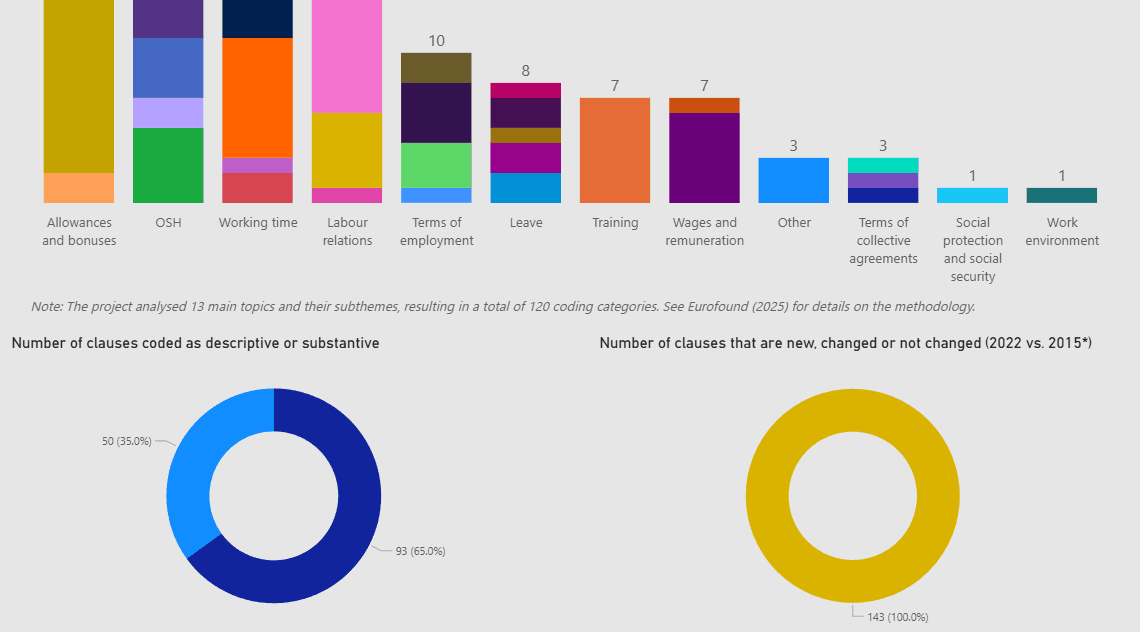
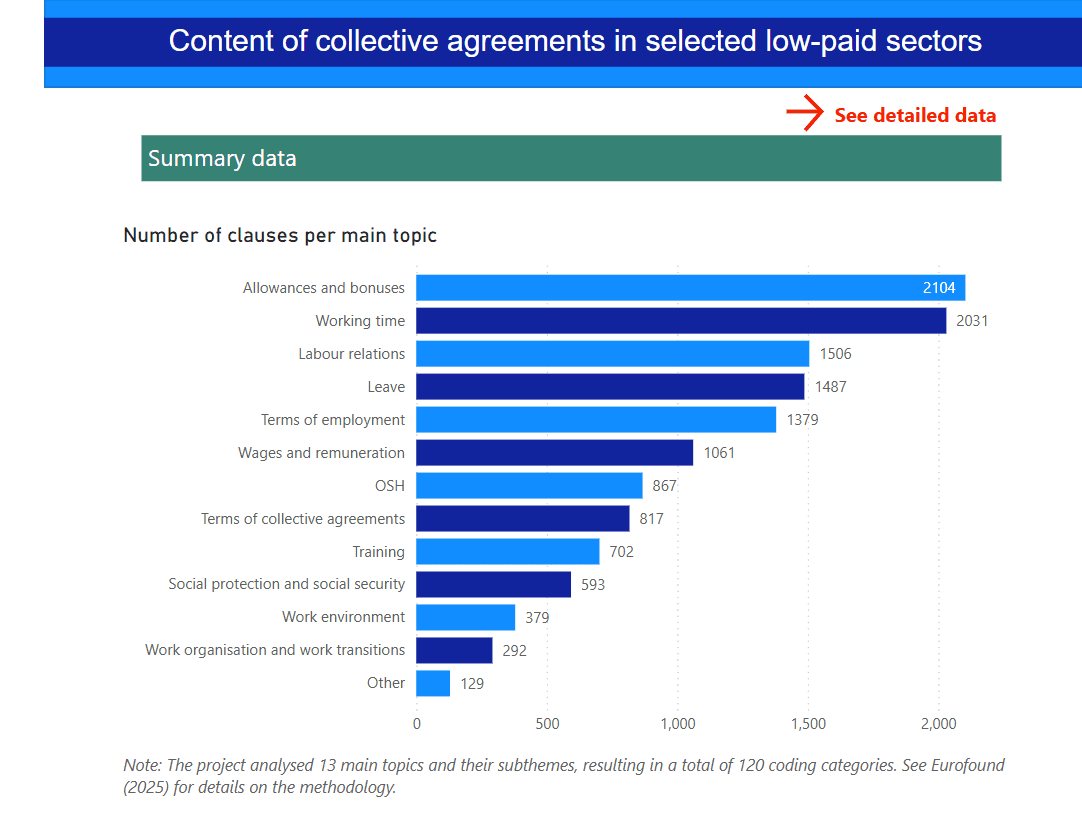
The database was developed by Eurofound as a part of the project ‘Collective bargaining beyond pay’ (2023-2025). It analyses and compares 94 collective agreements across three low-paid sectors (manufacture of food, leather, textiles and clothes; residential and social care; retail) in 11 EU Member States - Austria, Belgium, Croatia, Czechia, Finland, France, Italy, the Netherlands, Portugal, Spain, Slovakia - and Norway. The research builds on Eurofound’s database of collective agreements related to low-paid workers, collected for the Agency’s pilot project on minimum wages and looks ‘beyond’ wage-setting at other topics featured in the collective agreements. Over 13,000 clauses were coded, analysed and grouped into key topics and sub-topics. The database shows how these topics have developed over time by comparing two versions of the same collective agreement, valid in 2015 (or closest year available) and in 2022 (or lates year available). Collective agreements were selected base on the sub-sample available in the Database on minimum wages for low-paid workers in collective agreements prior to its 2025 update.
The following experts at Eurofound can be contacted for questions relating to the database.
Mária Sedláková
Research officerMária Sedláková je výskumná pracovníčka v oddelení pracovného života nadácie Eurofound. Je zodpovedná za vypracovanie prehľadných správ pre sektorové štúdie reprezentatívnosti, riadenie a kontrolu kvality národného podávania správ o pracovnoprávnych vzťahoch, sociálnom dialógu a pracovnom živote a vypracovanie projektu kolektívneho vyjednávania nad rámec odmeny. Pred nástupom do nadácie Eurofound pracovala ako referentka pre technický výskum v rámci oddelenia riadenia a tripartity v Medzinárodnej organizácii práce v Ženeve na hlavnej správe sociálneho dialógu za rok 2022. Pôsobila tiež ako výskumná pracovníčka na Stredoeurópskom inštitúte štúdií práce v Bratislave (2013 – 2020) so zameraním na sociálny dialóg, kolektívne vyjednávanie, pracovné podmienky a sociológiu práce. Maria je držiteľkou magisterského titulu v odbore politológia so špecializáciou na komparatívnu európsku politiku na Stredoeurópskej univerzite.
19 December 2025