&w=3840&q=90)
Minimalna plača
Izraz 'minimalna plača' se nanaša na regulativno omejitev glede najnižje stopnje, ki jo morajo delodajalci plačati delavcem. Zakonsko določene minimalne plače urejajo formalni zakoni ali zakoni. Kolektivno dogovorjene minimalne plače so določene v kolektivnih pogodbah med sindikati in delodajalci. Izraz 'nacionalne minimalne plače' se uporablja, kadar imajo države eno (ali več) osnovnih stopenj, ki pokrivajo delavce po vsej državi. Lahko so zakonsko ali kolektivno dogovorjene.
Najnovejše vsebine na to temo so navedene spodaj.
Minimalne plače v porastu: učinki in politične lekcije desetletja sprememb
Ta politični povzetek preučuje, kako lahko zvišanja nacionalnih minimumov vplivajo na plače zaposlenih, neenakost plač, kolektivno pogajanje in širšo strukturo zaposlovanja.Nizko plačana delovna mesta: Trendi zaposlovanja in vpliv politik minimalne plače
To poročilo preučuje dolgoročne učinke politik minimalne plače na zaposlitvene strukture po celotni EU-27 v zadnjih dveh desetletjih. Sistematično analizira, kako so spremembe v sektorskih in poklicnih vzorcih zaposlovanja povezane s temi politikami.Minimalne plače v letu 2026: Letni pregled
Določanje minimalne plače po vsej EU je postalo vse bolj dinamično in pozorno področje politike, oblikovano z uvedbo Direktive EU o minimalni plači in desetletjem trajne realne rasti zakonsko določenih stopenj. To poročilo preučuje razprave o določanju plač, ki so potekale med državami članicami in Norveško leta 2025, s poudarkom na državah z in brez nacionalne minimalne plače, na medsebojno delovanje med minimalnimi plačami in kolektivnim pogajanjem v nizko plačanih sektorjih ter na vse večjo vlogo referenčnih vrednosti pri oblikovanju nacionalnih odločitev.Nazadnje posodobljeno: 4 September 2026
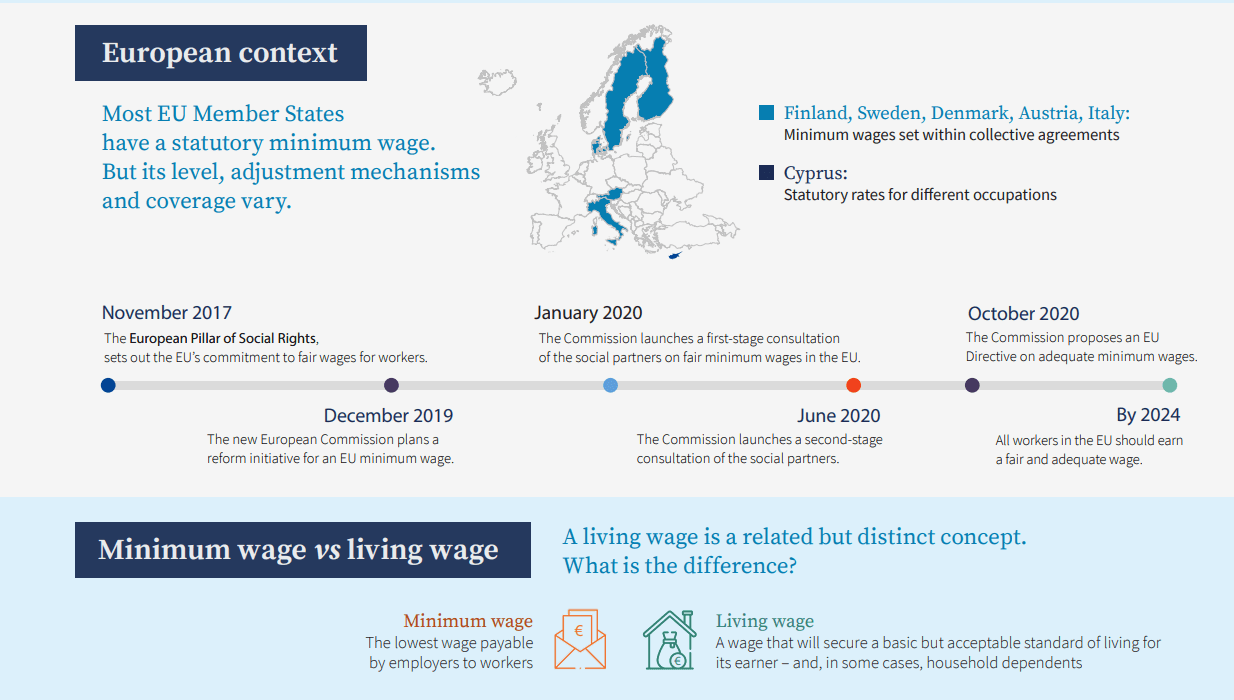
Naša infografika ponuja dodatne podrobnosti o situaciji v letu 2020.
Epizoda 32Kako se spreminjajo ravni minimalne plače v Evropi?
V tej epizodi se Mary McCaughey sreča z Eurofoundovim strokovnjakom Carlosom Vacasom Sorianom, da bi raziskala, kako so se minimalne plače v Evropi spremenile v zadnjem letu in posledice teh premikov. Poslušalci so vabljeni, da se potopijo v zapletenost dinamike minimalne plače v Evropi in dejavnike, ki spodbujajo te spremembe. Pogovor osvetljuje tudi širše posledice spremembe minimalne plače za dohodkovne neenakosti in enakost spolov.Eurofound redno posodablja plače v EU, vključno z letno študijo o tem, kako so se stopnje minimalne plače razvijale po EU (pa tudi na Norveškem), ter pregleduje, kako nacionalne vlade in socialni partnerji sodelujejo pri določanju novih stopenj. Agencija preučuje tudi koncept dostojne plače, katere cilj je zagotoviti delavcem in njihovim družinam dostojno življenjsko in socialno udeležbo kot odziv na nezadostnost dohodka za številna delovna gospodinjstva, ki so odvisna od obstoječih nacionalnih minimalnih plač.
Večina držav članic EU ima nacionalno (zakonsko) minimalno plačo, čeprav se njena raven, mehanizmi prilagajanja in obseg razlikujejo. Avstrija, Danska, Finska, Italija in Švedska imajo minimalne plače, določene v kolektivnih pogodbah.
Evropski steber socialnih pravic, razglašen leta 2017, določa zavezo EU k poštenim plačam za delavce. To vključuje zagotavljanje ustreznih plač za delavce, da bodo oni in njihove družine imeli dostojno življenjsko standard, zagotavljanje možnosti nizko usposobljenih in mladih delavcev, da najdejo zaposlitev, hkrati pa naredi delo finančno privlačno. Akcijski načrt za izvajanje stebra, objavljen marca 2021, je tlakoval pot za reformno pobudo za minimalno plačo v EU.
Dne 28. oktobra 2020 je Komisija predstavila predlog Direktive EU o ustreznih minimalnih plačah. Sledil je politični dogovor med Evropskim parlamentom in državami članicami 7. junija 2022. Direktiva o minimalnih plačah je bila sprejeta oktobra 2022. Namenjena je izboljšanju življenjskega standarda z namenom doseganja navzgor in zmanjšanja revščine med zaposlenimi, neenakosti v plačah in razlike v plačah med spoloma. Države članice so morale direktivo prenesti v nacionalno zakonodajo do novembra 2024 (člen 17). Leta 2023 je Danska zahtevala popolno ali delno razveljavitev direktive pri Sodišču Evropske države (C-19/23). 11. novembra 2025 je Sodišče EU izdalo svojo odločitev, s katero je potrdilo njeno pravno veljavnost, ob upoštevanju delne razveljavitve.
Nazadnje posodobljeno: 3 June 2026
Eurofoundovi profili držav o minimalni plači opisujejo, kako so minimalne plače regulirane in določene v državah Evropske unije in na Norveškem. Lahko jih beremo kot ozadje za letno serijo Eurofoundovih pregledov določanja minimalne plače.
To je izbor najpomembnejših ugotovitev v zvezi s to temo.
1 September 2026
Minimalne plače v letu 2026: Letni pregled
&w=3840&q=75)
29 January 2026
Nacionalne minimalne plače, 2026 (grafikon)

30 January 2026
Resnična rast minimalnih plač v letu 2026, ob napredku in upočasnjevanju ambicij držav članic

26 January 2024
Minimum wages for low-paid workers in collective agreements
In this pilot project, Eurofound successfully established the feasibility of, and piloted, an EU-wide database of minimum pay rates contained in collective agreements related to low-paid workers. A conceptual and measurement framework was devised, a total of 692 collective agreements – related to 24 low-paid sectors of interest – were selected to be ‘fully coded’ and representative data on negotiated minimum pay were compiled for 24 EU Member States. Based on more than 3,202 renewal texts, time series of collectively agreed minimum rates were created from 2015 to 2022 for 19 countries. This is the first time that an EU-wide data collection has provided comparative time series on negotiated pay. Key findings are is that in some countries outdated agreements contain rates below the applicable statutory minima, and that the potential of collective agreements to regulate pay generally or for employees earning higher wages than the minimum pay is not always fully capitalised on.
See also the national country reports (Eurofound papers), providing meta-data for the data collection, at the end of this web page.

27 November 2023
Minimum wages: Non-compliance and enforcement across EU Member States – Comparative report
In the EU, non-compliance with statutory or negotiated minimum wages averages 6.93% or 1.3%, depending on the statistics used. The lowest national estimate is 0.01% in Belgium and the highest is 11.59% in Hungary. It mostly affects young workers, those on fixed-term or part-time contracts and those working for small companies. It is more common in services than in manufacturing, and is characterised by shorter working time. Member States monitor, enforce and promote compliance in similar ways, although with some differences. This report identifies hindering and enabling factors. Some countries focus on specific economic sectors, such as construction, domestic work, platform work, agriculture and meat processing. National authorities often enforce minimum wages indirectly by helping employers comply, raising workers’ awareness, and helping stakeholders increase cooperation and develop faster procedures. Combining these soft initiatives with tougher measures increases the effectiveness of inspectorates’ actions in enforcing compliance with minimum wages.
30 November 2022
Regulating minimum wage and other forms of pay for the self-employed
This report is carried out in the context of the three-year pilot project (2021–2023), ‘Role of the minimum wage in establishing the Universal Labour Guarantee’, mandated to Eurofound by the European Commission. Its focus is module 3 of the project, investigating minimum wages and other forms of pay for the self-employed. Out of concern for the challenging conditions faced by certain groups of self-employed workers, some Member States have established or are in discussions about proposing some statutory forms of minimum pay for selected categories of the self-employed. The main objective of the report is to understand how minimum wages, wage rates, tariffs, fees and other forms of pay could be fixed for specific jobs or professions in sectors having a high level of ‘vulnerable’ workers, as well as ‘concealed’ self-employed. While the majority of Member States allow trade union representation, the right to collective bargaining for the self-employed is much more limited. Only a small number of Member States provide examples of collectively agreed minimum wages or other forms of pay for the self-employed.
15 June 2022
How to ensure adequate minimum wages in an age of inflation

Minimum wages in the EU

Raziskovalci agencije Eurofound zagotavljajo strokovno znanje in jih je mogoče kontaktirati za vprašanja ali poizvedbe medijev.
Carlos Vacas Soriano
Senior research managerCarlos Vacas Soriano je višji raziskovalni vodja v enoti za zaposlovanje pri Eurofoundu. Ukvarja se s temami, povezanimi z neenakostmi v plačah in dohodkih, minimalnimi plačami, nizkimi plačami, kakovostjo zaposlitve, začasno zaposlitvijo in segmentacijo ter kakovostjo zaposlitve. Preden se je leta 2010 pridružil Eurofoundu, je delal kot makroekonomski analitik za Evropsko komisijo in kot raziskovalec na evropskih trgih dela pri Španski centralni banki. Ima magisterij iz evropskih ekonomskih študij z College of Europe v Bruggeu in doktorat iz delovne ekonomije z Univerze v Salamanci (doktor Europaeus).
Christine Aumayr-Pintar
Senior research managerChristine Aumayr-Pintar je višja vodja raziskav v enoti za delovno življenje pri Eurofoundu. Usklajuje Eurofoundove raziskave o socialnem dialogu in odnosih med delodajalci in delojemalci ter nadzira mrežo Eurofoundovih dopisnikov (NEC). Njeno primarno raziskovalno strokovno znanje – pristop s primerjalnega vseevropskega vidika – se osredotoča na minimalne plače, kolektivno dogovorjene plače in preglednost plač med spoloma. Preden se je leta 2009 pridružila Eurofoundu, je bila raziskovalka na področju trgov dela in regionalne ekonomije pri Joanneum Research v Avstriji. Magistrirala je iz ekonomije in doktorirala iz družboslovja/ekonomije, študirala je ekonomijo v Gradcu, na Dunaju in v Jönköpingu.
Ta razdelek omogoča dostop do vseh vsebin, ki so bile objavljene na to temo.


