&w=3840&q=90)
Titta på webbseminariet - Eurofound LIVE: Hur förändrar AI arbetslivet i Europa?
11:00 – 12:00 Irländsk lokal tid
Online
Eurofound, tillsammans med European Centre for the Development of Vocational Training (Cedefop), organiserar ett interaktivt gemensamt webbseminarium som undersöker hur AI förändrar arbetslivet i Europa, med en direktsänd frågestund tisdagen den 11 februari 2025. 11:00 – 12:00 irländsk tid, 12:00–13:00 centraleuropeisk tid.
Bakgrund till evenemanget
Debatten
I år firar Eurofound och Europeiska centret för utveckling av yrkesutbildning (Cedefop)opens in new tab båda sitt 50-årsjubileum. Myndigheternas långvarighet och deras arbetes påverkan är ett bevis på vikten av evidensbaserad forskning för att anpassa sig till förändringar på arbetsmarknaden och driva ekonomisk utveckling.
Denna specialisering och evidensbaserade metod behövs nu mer än någonsin för att hantera de snabba förändringarna på arbetsmarknaden och arbetslivet. Ny teknik har en djupgående påverkan på olika områden i våra arbetsliv. De har potential att öka effektiviteten, minska risker och förbättra arbetskvaliteten. Europa måste utnyttja dem för att förbättra arbetslivet samt behålla sin konkurrensfördel.
Artificiell intelligens (AI) står i centrum för denna förändring. Förutom sin enorma potential för vinst och framsteg har det inneburit utmaningar, inklusive oro för att arbetsmarknaden kan förlora för medel- och lågutbildade arbetare. AI förändrar uppgifter och kompetensbehov över hela linjen och mer måste göras för att minska gapet mellan de nya kunskaps- och kompetensbehoven kopplade till AI och den låga andelen arbetare som utbildar sig för det. Det finns också betydande affärsmässiga konsekvenser, och små och medelstora företag kan gå förlorade mot större företag som kan investera mer i AI-utveckling och implementering.
I detta specialwebbinarium #Eurofound50 samtalar Mary McCaughey , chef för information och kommunikation på Eurofound, med Dragoș Adăscăliței, Eurofounds forskningsansvarige, och Jasper Van Loo, samordnare för Cedefop-avdelningen, om hur AI redan förändrar arbetslivet i Europa och vad som behöver göras för att utnyttja dess enorma potential samtidigt som man skyddar dem som riskerar att bli lämnade kvar.
Titta på videon
&w=3840&q=100)
This video is hosted by a third party, YouTube.
By clicking on the button to play the video you accept their terms and conditions .
Talare
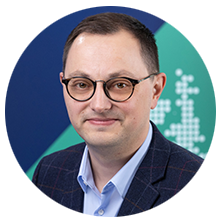 | Speaker: Dragoș Adăscăliței Dragoș Adăscăliței is a research officer in the Employment unit at Eurofound. His current research focuses on topics related to the future of work, including the impact of artificial intelligence on jobs, the consequences of automation for employment and regulatory issues surrounding the platform economy. He is also a regular contributor to comparative projects monitoring structural changes in European labour markets. Prior to joining Eurofound, he was a lecturer in Employment Relations at the University of Sheffield, Management School. He holds an MA in Political Science from Central European University and a PhD in Sociology from the University of Mannheim. |
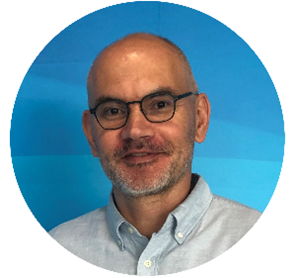 | Speaker: Jasper Van Loo Jasper Van Loo is coordinator in Cedefop’s department for VET and Skills. Jasper oversees the labour market and skills analysis work of the agency and coordinates the work of two teams. He is also a member of the skills intelligence and foresight team and he has been driving efforts to develop the next generation skills intelligence Europe needs to shape an inclusive twin digital and green transition via skills. Before joining Cedefop in 2007, Jasper worked for the Research Centre for Education and the Labour Market (ROA) in The Netherlands. He has a master degree in quantitative and general economics from Maastricht University and holds a PhD in Social Sciences from Utrecht University. |
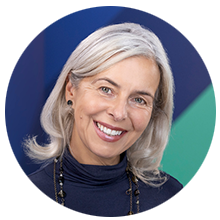 | Moderator: Mary McCaughey Mary McCaughey is Head of Information and Communication in Eurofound. A graduate of Trinity College, Dublin and the College of Europe, Bruges, she started work in Brussels with Europolitics and the Wall Street Journal Europe. She worked with the Association of European Parliamentarians with Africa (AWEPA) in South Africa during the country’s transition to democracy, and in 1998 she took up the post of spokesperson with the Delegation of the European Union in Pretoria, heading up its press and information department during the negotiation of the EU–South Africa free trade agreement. Following the end of the Kosovo War, she worked as a communications consultant for the European Agency for Reconstruction in Serbia. She took up the post of Editor-in-Chief in Eurofound in 2003. |
Bild ©: Ekaterina Pokrovsky/Adobe Stock
Agenda
Serie: Eurofound LIVE events
In Eurofound LIVE events, our researchers and external experts explore key topics on the EU social agenda. These dynamic discussions provide fresh insights and foster meaningful dialogue on issues that matter.
Watch the webinar - Eurofound LIVE: Is Europe's green transition in jeopardy?

Watch the webinar - Eurofound LIVE - Bridging the rural–urban divide in Europe: upgrading the European Union convergence machine

Watch the webinar - Eurofound LIVE: Understanding the socioeconomic impact of the EU's transition to a climate-neutral economy – How to make the Green Deal a reality?

 This website is an official website of the European Union.
All official European Union website addresses are in the europa.eu domain.
See all EU institutions and bodies
Europeiska stiftelsen för förbättring av levnads- och arbetsvillkor