Šī lapa ir tulkota, izmantojot mašīntulkojumu. Lūdzu, skatiet oriģinālo versiju angļu valodā un iepazīstieties ar Eurofound valodu politiku.

Darba kvalitāte

Darba kvalitāte papildina darba kvantitātes mērījumus, lai sniegtu nodarbinātības stratēģijas novērtējumu. Darba kvalitāte ir daudzdimensionāls jēdziens, kurā dažādas politikas darba kārtības un disciplīnas uzsver dažādas dimensijas. Lielākajā daļā Eurofound pētījumu darbvietu kvalitāte tiek mērīta darba līmenī. Tas ietver darba iezīmes, kas atspoguļotas no objektīvas perspektīvas, kuras var novērot un ir saistītas ar cilvēku vajadzību apmierināšanu darbā. To veido visas darba un nodarbinātības īpašības, kurām ir pierādīta cēloņsakarība ar veselību un labklājību. Ir iekļautas darba pozitīvās un negatīvās iezīmes. Šie rādītāji atspoguļo darba resursus (fiziskos, psiholoģiskos, sociālos vai organizatoriskos aspektus) un darba prasības vai procesus, kas tos ietekmē.

Scientists work in the laboratory

Jauns un gaidāms

Atrodiet jaunāko saturu par šo tēmu zemāk.

Digitālais stāsts

14 April 2026

2024. gada Eiropas darba apstākļu apsekojums – svarīgākie notikumi
Šajā digitālajā stāstā ir iepazīstināti ar svarīgākajiem notikumiem no 2024. gada pārskata ziņojuma par Eiropas darba apstākļu apsekojumu. Tajā aplūkoti galvenie konstatējumi katrā ziņojuma nodaļā, galveno uzmanību pievēršot Eiropas darbaspēkam, darbavietas praksei, darba kvalitātes mērīšanai, darba kvalitātes tendencēm laika gaitā, kā arī darba dzīves kvalitātei ES.
Pamatziņojums

14 April 2026

2024. gada Eiropas darba apstākļu apsekojums: pārskata ziņojums
+3
Agnès Parent-Thirionand 6 other authors
2024. gada Eiropas darba apstākļu apsekojums jau astotajā izdevumā atspoguļo izmaiņas darba dzīvē vairāk nekā trīs desmitgažu laikā. Šis augstas kvalitātes, uz varbūtību balstītais apsekojums aptver 35 Eiropas valstis, tostarp 27 ES dalībvalstis, Norvēģiju, Šveici, Albāniju, Bosniju un Hercegovinu, Melnkalni, Ziemeļmaķedoniju, Kosovu un Serbiju. Aptaujas ietvaros notika vairāk nekā 36 600 klātienes intervijas, katra ilga aptuveni 45 minūtes.
Pētījuma ziņojums

29 January 2026

Darba kvalitāte un darba apstākļi Rietumbalkānos
+2
Mihail Arandarenkoand 5 other authors
Šajā ziņojumā ir dokumentēti darba apstākļi un darba kvalitāte Rietumbalkānos, pamatojoties uz 2021. gadā apkopotajiem datiem par Eiropas darba apstākļu telefona apsekojumu. Tas sniedz jaunas reģionālas atziņas Eiropas darba apstākļu analīzē un cenšas palielināt izpratni par šo tēmu un paplašināt reģiona politikas veidotāju, sociālo partneru, pētnieku un plašākas sabiedrības redzesloku.

Par Darba kvalitāte

Uzzināt vairāk par šo tēmu un tās nozīmi ES politikas veidošanā.

Galvenie secinājumi par Darba kvalitāte

Šis ir atlase no svarīgākajiem rezultātiem par šo tēmu.

3 September 2025

Digitālais stāsts

Darba kvalitātes tendences: EWCS 2024. gada pirmie konstatējumi

EWCS 2024 atklāj jaunākās tendences darbvietu kvalitātē, pamatojoties uz septiņām darba kvalitātes sistēmas dimensijām. Šis EWCS pirmo atklājumu digitālais stāsts sniedz pārskatu par EWCS 2024. gada datu sākotnējo analīzi.

30 June 2024

Pētījuma ziņojums

Job quality side of climate change

Workers will experience the effects of climate change in many ways: job insecurity, changes to their work tasks and responsibilities, and changes in their workplaces that may involve different work practices and the development of new activities and products. Climate change risks are associated with increased exposure to hazards, leading to lower standards of job quality, productivity loss and greater job and work insecurity. Nearly half of workers in the EU will experience profound changes in their job tasks as economies adapt to climate change and climate mitigation strategies are implemented. In addition, work is likely to change as a result of company responses to climate change. These changes in work, while increasing the vulnerability of some workers, offer opportunities to improve some dimensions of job quality. This report outlines the complex relationship between job quality and climate change, including the implication of green tasks in selected sectors.

30 January 2024

Pētījuma ziņojums

Self-employment in the EU: Job quality and developments in social protection

Ensuring greater social protection for self-employed people has been the subject of much policy debate in recent years. In 2019, the Council of the European Union adopted a recommendation on access to social protection for workers and the self-employed. Sudden reductions in income during the COVID-19 pandemic highlighted the vulnerability of many self-employed workers. Using data from the European Working Conditions Telephone Survey, this report examines the working conditions of different groups of self-employed people. It analyses measures taken at EU Member State level to better protect self-employed individuals against the risks of unemployment, workplace accidents and sickness, and presents lessons learned from measures implemented during the pandemic.

9 October 2023

Politikas kopsavilkums

Job quality of COVID-19 pandemic essential workers

During the COVID-19 pandemic, a diverse collection of workers ensured the functioning of our societies. In a time of crisis, they maintained access to healthcare, long-term care and other essential goods and services, including food, water, electricity, the internet and waste treatment. These were the COVID-19 pandemic essential, or critical, workers, many of whom risked their physical and mental health by continuing to go to work during the pandemic.

This policy brief investigates the job quality of these critical workers, making use of unique sources of information, including data from the European Working Conditions Telephone Survey 2021, data gathered by correspondents from across the Member States and interviews with EU-level social partner representatives from selected sectors. It examines the experiences of work among critical workers during the pandemic, and highlights imminent challenges to the sustainability of their work. The aim is to discover whether these workers are equipped to support society through future shocks and crises.

26 February 2021

Pamatziņojums

Working conditions and sustainable work: An analysis using the job quality framework

This flagship report summarises the key findings of Eurofound’s research on working conditions conducted over the programming period 2017–2020. It maps the progress achieved since 2000 in improving working conditions and examines whether all workers have benefited equally from positive change. It highlights which groups are the most at risk of experiencing poor working conditions and being left behind. Given the changes in the world of work, emerging challenges for good job quality are identified. The report also provides evidence for measures that could lead to the further improvement of work and the achievement of fair working conditions for all in the EU. The analysis shows that, overall, job quality in the EU is improving, if slowly. Not all workers are benefiting to the same extent, however. Furthermore, gender, age and contractual status have a significant bearing on a person’s working conditions. And while digitalisation helps to address some job quality issues, it also creates new challenges. The COVID-19 pandemic has exacerbated trends, reinforcing concerns and highlighting the importance of achieving job quality for all.

2 March 2020

Pētījuma ziņojums

Gender equality at work

Gender inequality at work persists across Europe, despite the long standing attention paid and efforts made to tackle it. This Eurofound report presents a closer look at women’s and men’s working conditions, using data from Eurofound’s European Working Conditions Survey (EWCS) and complementing previous Eurofound research on, among other things, working time patterns, work–life balance and workers’ health. Beyond the general differences in the labour market, it highlights many important gaps in men’s and women’s working conditions and job quality which require specific attention. According to the EWCS data, the reduction of gender gaps in those areas showing improvement over the last 5 to 10 years remains limited. European and national strategies aimed at achieving job quality for all, that seek to mainstream gender equality, could help address persistent inequalities between men and women.

12 October 2020

Pamatziņojums

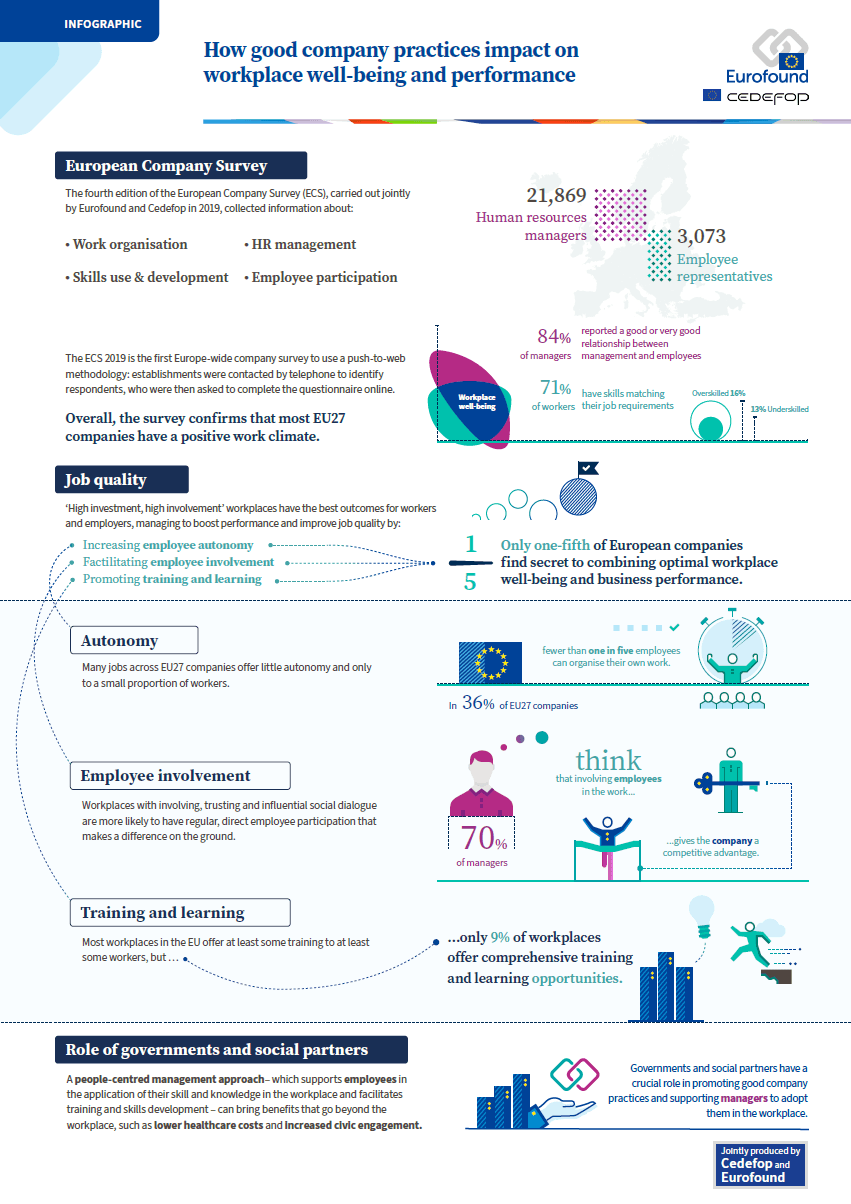
European Company Survey 2019 - Workplace practices unlocking employee potential

This report is based on the fourth edition of the European Company Survey (ECS), which was carried out jointly by Eurofound and Cedefop in 2019. It describes a wide range of practices and strategies implemented by European companies in terms of work organisation, human resource management, skills use and skills development, and employee voice. The report shows how these practices are combined and how the resulting ‘bundles of practices’ are associated with two outcomes beneficial to employees and employers: workplace well-being and establishment performance.

The analysis finds that the establishments that are most likely to generate this win–win outcome are those that combine a high degree of worker autonomy, a balanced motivational strategy, a comprehensive training and learning strategy, and high levels of direct employee involvement in decision-making, as well as offering managerial support for these practices. To boost the adoption of employee-oriented practices – particularly in relation to autonomy, skills and employee involvement – managers should be offered appropriate support, as they play a key role in the decision to initiate workplace change. They are also crucial to its success, as they must continuously support the workplace practices implemented.

6 May 2019

Pētījuma ziņojums

Working conditions in a global perspective

Job quality is a major focus of policymakers around the world. For workers, the enterprises that employ them and for societies, there are benefits associated with high-quality jobs, and costs associated with poor-quality jobs. This report – the result of a pioneering project by the International Labour Organization and Eurofound – provides a comparative analysis of job quality covering approximately 1.2 billion workers in Europe, Asia and the Americas. It analyses seven dimensions of job quality: the physical environment, work intensity, working time quality, the social environment, skills and development, prospects, and earnings, finding both important differences and similarities between countries. By analysing positive and negative aspects of job quality in different countries and societies, the report provides a way to look beyond national explanations, to see how some groups of workers are affected more than others and understand the particular issues for women workers around the world – in support of evidence-based policymaking to improve job quality.

17 November 2016

Pētījuma ziņojums

Sixth European Working Conditions Survey – Overview report

The sixth European Working Conditions Survey (EWCS) builds on the lessons learned from the previous five surveys to paint a wide-ranging picture of Europe at work across countries, occupations, sectors and age groups. The analysis explores the findings using seven indices of job quality – physical environment, work intensity, working time quality, social environment, skills and discretion, prospects and earnings – and categorises workers into five typical job quality profiles.

Eksperti par Darba kvalitāte

Eurofound pētnieki sniedz ekspertu atzinumus, un ar viņiem var sazināties, ja ir jautājumi vai mediju pieprasījumi.

Jorge Cabrita

Senior research manager
Working life research

Jorge Cabrita ir vecākais pētniecības vadītājs Darba dzīves nodaļā. Viņš ir atbildīgs par Eiropas mēroga pētījumu formulēšanu, koordinēšanu un vadību, kā arī par atklājumu izplatīšanas veicināšanu darba apstākļu un darba attiecību jomā. Viņa galvenās pētniecības jomas ir darba apstākļi un darba kvalitāte, darba laiks un darba un privātās dzīves līdzsvars, darba ņēmēju veselība un labklājība, dzimumu līdztiesība un pārejas uz klimatneitrālu ekonomiku sociālekonomiskā ietekme. Pašlaik viņš vada pētījumus par darba laika attīstību un sociālo dialogu un darba koplīguma slēgšanas sarunām Covid-19 pandēmijas laikā. Iepriekš viņš strādāja par pētnieku Sociālās intervences studiju centrā un Lisabonas Ekonomikas augstskolas Portugāles ekonomikas pētniecības centrā, kā arī par pasniedzēju un konsultantu stratēģiskās vadības, organizatoriskās komunikācijas, vadības un komandas veidošanas jomās. Viņš ir ieguvis bakalaura grādu ekonomikā un maģistra grādu ekonomiskās darbības sociāli organizatoriskajās sistēmās Lisabonas Ekonomikas augstskolā.

Agnès Parent-Thirion

Senior research manager
Working life research

Agnès Parent-Thirion ir vecākā pētniecības vadītāja Eurofound Darba dzīves nodaļā, kuras uzdevums ir plānot, izstrādāt un īstenot darba apstākļu pētniecības projektus, jo īpaši Eiropas darba apstākļu apsekojumu (EWCS) un tā analīzi. Viņa ir atbildīga par EWCS 2021 ārkārtas izdevumu un anketas sagatavošanu EWCS 2024. gadam. Viņas pētnieciskās intereses ietver darba apstākļus, darba kvalitāti, darba apstākļu uzraudzību, darba organizāciju, dzimumu, darba nākotni un laiku. Viņa vairāk nekā desmit gadus strādā Eiropas salīdzinošo apsekojumu jomā visos aspektos, tostarp izstrādē, anketu izstrādē, lauka darbā, kvalitātes kontrolē un analīzē. Viņa ir absolvējusi ekonomiku un vadību Parīzes IX Dauphine un Parīzes I Panteonas Sorbonnas universitātēs, kā arī ieguvusi pēcdiploma diplomu statistikā Dublinas Trīsvienības koledžā. Viņa nesen ir pabeigusi tiešsaistes kursus par mākslīgo intelektu: izmeklēšanas virzīta vadība ar MIT Sloan Executive Education un "Les grand enjeux de la transition: re-ouvrir l'horizon, comprendre pour agir" ar Campus de la Transition. Pirms pievienošanās Eurofound viņa vairākus gadus strādāja Eiropas Komisijā.

Viss saturs par Darba kvalitāte

Šī sadaļa nodrošina piekļuvi visam saturam, kas ir publicēts par šo tēmu.

Flag of the European UnionThis website is an official website of the European Union.
European Foundation for the Improvement of Living and Working Conditions
The tripartite EU agency providing knowledge to assist in the development of better social, employment and work-related policies