&w=3840&q=90)
Минимална работна заплата
Терминът "минимална работна заплата" се отнася до регулаторното ограничение върху най-ниската ставка, която работодателите плащат на работниците. Законовите минимални заплати се регулират от официални закони или закони. Колективно договорените минимални заплати са определени в колективните договори между синдикати и работодатели. Терминът "национални минимални заплати" се използва, когато държавите имат една (или повече) основни ставки, обхващащи работниците в цялата страна. Те могат да бъдат както законови, така и колективно договорени.
Намерете най-новото съдържание по тази тема по-долу.
Минималните заплати се повишават: Ефекти и уроци от политика от десетилетие промени
Този политически брифинг разглежда как националните минимални увеличения могат да повлияят на нивата на заплащане на служителите, неравенството в заплащането, колективното договаряне и по-широката структура на заетостта.Нископлатени работни места: тенденции в заетостта и въздействие на политиките за минимална заплата
Този доклад разглежда дългосрочните ефекти от политиките за минимална работна заплата върху структурите на заетостта в ЕС-27 през последните две десетилетия. Той систематично анализира как промените в секторните и професионалните модели на заетост са свързани с тези политики.Минимални заплати през 2026 г.: Годишен преглед
Определянето на минималната работна заплата в целия ЕС се превърна в все по-динамична и внимателно следена политическа област, оформена от въвеждането на Директивата на ЕС за минималната работна заплата и десетилетие на устойчив реален растеж на законовите ставки. Този доклад разглежда дискусиите за определяне на заплатите, които се проведоха в държавите членки и Норвегия през 2025 г., като се фокусира върху страните с и без национална минимална работна заплата, взаимодействието между минималните заплати и колективното договаряне в ниско платените сектори, както и нарастващата роля на индикативните референтни стойности при формирането на националните решения.Последна актуализация: 4 September 2026
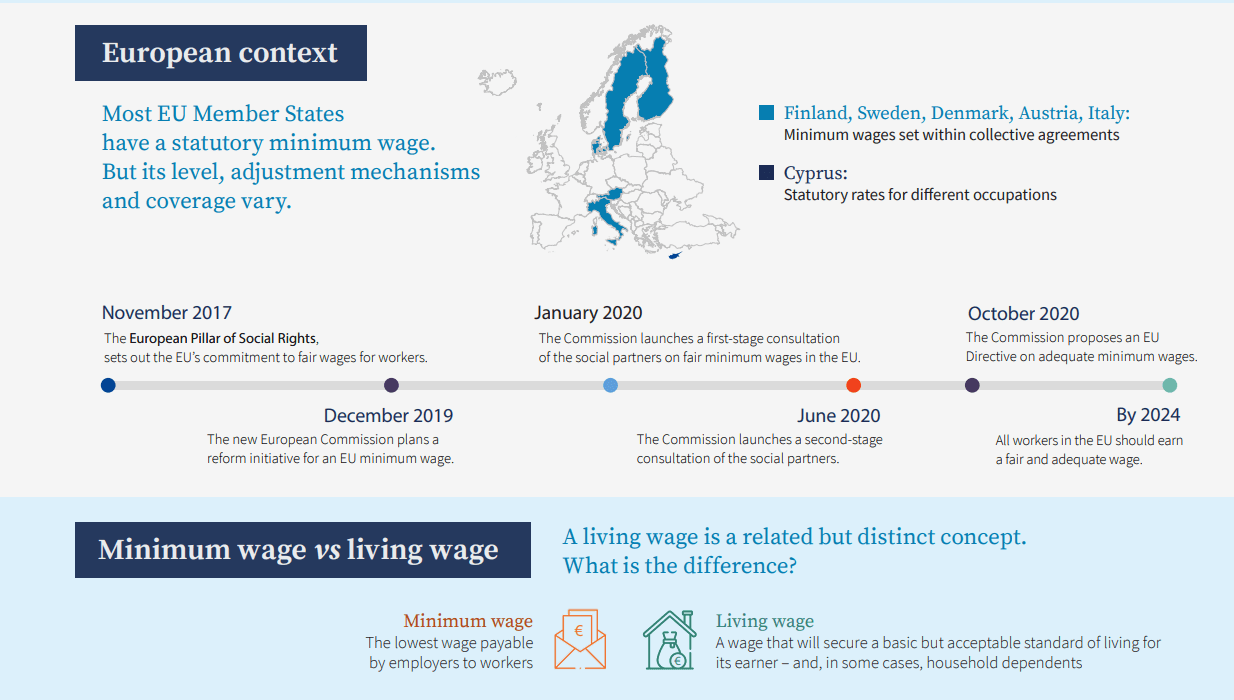
Нашата инфографика предоставя допълнителни подробности за ситуацията към 2020 г.
Епизод 32Как се променят нивата на минималната работна заплата в Европа?
В този епизод Мери Маккоуи разговаря с експерта на Eurofound Карлос Вакас Сориано, за да проучи как се са променили минималните заплати в Европа през последната година, както и последиците от тези промени. Слушателите са поканени да се потопят в тънкостите на динамиката на минималната работна заплата в Европа и факторите, движещи тези промени. Разговорът също така хвърля светлина върху по-широките последици от промяната на минималната работна заплата за неравенството в доходите и равенството между половете.Eurofound предоставя редовни актуализации за заплащането в ЕС, включително годишно изследване за това как са се развили минималните ставки в ЕС (както и в Норвегия), като разглежда как националните правителства и социалните партньори се ангажират с определянето на нови ставки. Агенцията разглежда и концепцията за жизнена заплата, насочена към гарантиране на работниците и техните семейства достойно ниво на живот и социално участие в отговор на недостатъчността на доходите за много работещи домакинства, зависими от съществуващите национални минимални ставки.
Повечето държави членки на ЕС имат национална (законна) минимална работна заплата, въпреки че нейното ниво, механизми за адаптация и обхват варират. Австрия, Дания, Финландия, Италия и Швеция имат минимални заплати, определени в колективните договори.
Европейският стълб на социалните права, провъзгласен през 2017 г., определя ангажимента на ЕС към справедливи заплати за работниците. Това включва осигуряване на адекватни заплати за работниците, за да им позволи на тях и техните семейства да имат приличен стандарт на живот, защита на способността на нискоквалифицираните и младите работници да намират работа, както и да направи работата финансово привлекателна. Планът за действие за прилагане на стълба, публикуван през март 2021 г., проправи пътя за реформа на минимална работна заплата в ЕС.
На 28 октомври 2020 г. Комисията предложи Директива на ЕС за адекватни минимални заплати. След това на 7 юни 2022 г. последва политическо споразумение между Европейския парламент и държавите членки. Директивата за минималните заплати беше приета през октомври 2022 г. Тя има за цел подобряване на жизнения стандарт с цел постигане на възходяща конвергенция и намаляване на бедността сред работниците, неравенството в заплащането и разликата в заплащането между половете. Държавите членки бяха задължени да пренесат директивата в националното законодателство до ноември 2024 г. (член 17). През 2023 г. Дания поиска пълно или алтернативно частично анулиране на директивата от Съда на ЕС (C-19/23). На 11 ноември 2025 г. CJEU прие своето решение, потвърждавайки правната ѝ валидност, с основание на частично анулиране.
Последна актуализация: 3 June 2026
Профилите на държавите с минимална работна заплата на Eurofound описват как се регулират и определят минималните заплати в страните от Европейския съюз и Норвегия. Те могат да се четат като фонова информация за годишния преглед на минималната работна заплата на Eurofound.
Това е подборка от най-важните резултати по тази тема.
1 September 2026
Минимални заплати през 2026 г.: Годишен преглед
&w=3840&q=75)
29 January 2026
Национални минимални заплати, 2026 (графика)

30 January 2026
Реален ръст на минималните работни заплати през 2026 г., на фона както на напредък, така и с намаляване на амбициите на държавите членки

26 January 2024
Minimum wages for low-paid workers in collective agreements
In this pilot project, Eurofound successfully established the feasibility of, and piloted, an EU-wide database of minimum pay rates contained in collective agreements related to low-paid workers. A conceptual and measurement framework was devised, a total of 692 collective agreements – related to 24 low-paid sectors of interest – were selected to be ‘fully coded’ and representative data on negotiated minimum pay were compiled for 24 EU Member States. Based on more than 3,202 renewal texts, time series of collectively agreed minimum rates were created from 2015 to 2022 for 19 countries. This is the first time that an EU-wide data collection has provided comparative time series on negotiated pay. Key findings are is that in some countries outdated agreements contain rates below the applicable statutory minima, and that the potential of collective agreements to regulate pay generally or for employees earning higher wages than the minimum pay is not always fully capitalised on.
See also the national country reports (Eurofound papers), providing meta-data for the data collection, at the end of this web page.

27 November 2023
Minimum wages: Non-compliance and enforcement across EU Member States – Comparative report
In the EU, non-compliance with statutory or negotiated minimum wages averages 6.93% or 1.3%, depending on the statistics used. The lowest national estimate is 0.01% in Belgium and the highest is 11.59% in Hungary. It mostly affects young workers, those on fixed-term or part-time contracts and those working for small companies. It is more common in services than in manufacturing, and is characterised by shorter working time. Member States monitor, enforce and promote compliance in similar ways, although with some differences. This report identifies hindering and enabling factors. Some countries focus on specific economic sectors, such as construction, domestic work, platform work, agriculture and meat processing. National authorities often enforce minimum wages indirectly by helping employers comply, raising workers’ awareness, and helping stakeholders increase cooperation and develop faster procedures. Combining these soft initiatives with tougher measures increases the effectiveness of inspectorates’ actions in enforcing compliance with minimum wages.
30 November 2022
Regulating minimum wage and other forms of pay for the self-employed
This report is carried out in the context of the three-year pilot project (2021–2023), ‘Role of the minimum wage in establishing the Universal Labour Guarantee’, mandated to Eurofound by the European Commission. Its focus is module 3 of the project, investigating minimum wages and other forms of pay for the self-employed. Out of concern for the challenging conditions faced by certain groups of self-employed workers, some Member States have established or are in discussions about proposing some statutory forms of minimum pay for selected categories of the self-employed. The main objective of the report is to understand how minimum wages, wage rates, tariffs, fees and other forms of pay could be fixed for specific jobs or professions in sectors having a high level of ‘vulnerable’ workers, as well as ‘concealed’ self-employed. While the majority of Member States allow trade union representation, the right to collective bargaining for the self-employed is much more limited. Only a small number of Member States provide examples of collectively agreed minimum wages or other forms of pay for the self-employed.
15 June 2022
How to ensure adequate minimum wages in an age of inflation

Minimum wages in the EU

Изследователите в Еврофонд предоставят експертни становища и могат да бъдат потърсени за въпроси или медийни запитвания.
Carlos Vacas Soriano
Senior research managerКарлос Вакас Сориано е старши изследователски мениджър в отдела по заетост в Eurofound. Работи по теми, свързани с неравенствата в заплащането и доходите, минималните заплати, ниското заплащане, качеството на работните места, временната заетост и сегментацията, както и качеството на работните места. Преди да се присъедини към Eurofound през 2010 г., е работил като макроикономически анализатор за Европейската комисия и като изследовател на европейските пазари на труда в Испанската централна банка. Той притежава магистърска степен по европейски икономически изследвания от Колежа на Европа в Брюж и докторска степен по трудова икономика от Университета в Саламанка (Doctor Europaeus).
Christine Aumayr-Pintar
Senior research managerКристин Аумайр-Пинтар е старши ръководител изследвания в отдела за трудов живот в Eurofound. Тя координира изследванията на Eurofound в областта на социалния диалог и индустриалните отношения и ръководи Мрежата на кореспондентите на Eurofound (NEC). Основният ѝ изследователски опит – подходен от сравнителна гледна точка на целия ЕС – е съсредоточен върху минималните работни заплати, колективното договорено заплащане и прозрачността на заплащането на жените и мъжете. Преди да се присъедини към Eurofound през 2009 г., тя е била изследовател на пазарите на труда и регионалната икономика в Joanneum Research в Австрия. Тя има магистърска степен по икономика и докторска степен по социални науки/икономика, след като е учила икономика в Грац, Виена и Йоншьопинг.
Този раздел осигурява достъп до цялото съдържание, което е публикувано по темата.


